THE VILLAGERS OF COLLINGHAM AND LINTON WHO SERVED IN WORLD WAR TWO
COLLINGHAMANDDISTRICTWARARCHIVE.INFO
 CONTACT


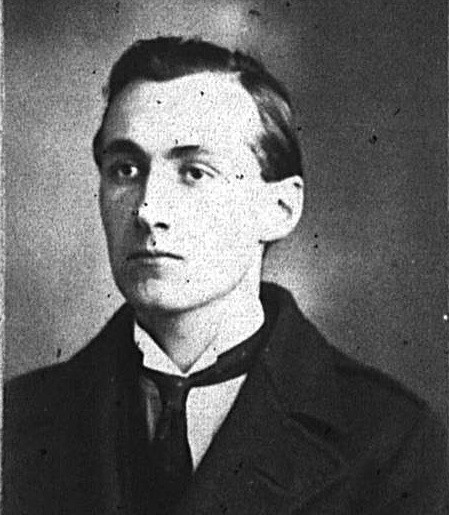
Rank 2nd Wireless Operator
Service MN
Unit
Regiment Merchant Navy
Biography
Family background
Alan was the son of William Wilkinson Brown and his wife, Eliza Emma Brown (nee Elliott). William and Eliza had married on the 25th December 1897 at St.Clement Church, Sheepscar, Leeds. At that time William gave his address as being in Morecombe and his occupation as a manager. William and Eliza started a family and according to later records (the 1911 census) had five children of whom only two had survived until 1911. Those two children were Edward William Elliott Brown and Alan Elliott Brown [note that the spelling of Elliott is sometimes found as Eliott and that of Alan sometimes as Allan]. Edward was born in 1898 and Alan on the 14th November 1899. The family may have made their homes close to Morecombe at that time or they may have visited briefly but both boys were baptised at St. Barnabus Church in Morecombe on the same day, the 31st May 1900. Their father gave his occupation at the time as a grocer of Leeds.
From the records we have found it appears that William was changing occupations around this time and the family were also moving. By the date of the 1901 census, Edward William Elliott Brown, Alan Elliott Brown and their mother Eliza Emma Brown were living at 96 Bankside Street in Potter Newton Leeds. They formed part of a larger household headed by Eliza E Bond aged 63, a music book dealer from Leeds. This entry is difficult to read and the surname is uncertain - confusing as well the head of this household shared Christian names with William Wilkinson Brown's wife. Also present were Eliza "Bond's" son, John William Brown aged 40, also a music dealer; Eliza E Brown (William Wilkinson's wife), aged 31, and the two children, Edward WE Brown, aged 2 and Allan E Brown, aged 1. Edward G Brown, aged 27, a professor of violin music and two domestic servants completed the household. It is clear that the Elliott family were very musical, and William and Eliza moved into occupations in the music business.
By 1911, William and Eliza had moved to live at 11 Elford Terrace in Harehills in Leeds. William now gave his occupation as a music seller. His wife Eliza was 41, Edward was 12, and Alan 11. William Elliott Brown, aged 50, a single man who worked as a music seller's assistant was also living there and we think this may be the John William Brown aged 40 in the 1901 census.
Allan's brother Edward served during the Great War and the family settled in Collingham in the 1920s. From 1920 to 1924 they are listed on the electoral rolls of Collingham: Alan Eliott Brown at Harewood Road; Edward William Elliott Brown at Collingham and Eliza Emma Brown and William Brown at Langwith. The 1921 census reveals the family living at Harewood Road, Collingham. William is the head of the household and was still a music seller. Eliza Emma was a music seller's assistant. Edward William Elliott Brown gave his occupation as a clerk, while Allan Elliott Brown was listed as a wireless transmitter operator, out of work. They had a housekeeper, Elizabeth Hariett Harrison.
In the early 1930s, the family lived around Collingham and Harewood. In 1930 to 1932 Eliza Emma, William and Alan Elliott Brown were at Primrose Cottage, Collingham and then from 1933 to 1935 they were joined by Lucy Brown and Marjory Brown at Wetherby Road, Harewood.
Service record
The 1939 National Registration for Collingham shows that Allan was living at 5 Garth End, Collingham with Fred and Eliza E B Campbell and Jenny Campbell. Eliza Campbell's date of birth is given as 15th September 1869 so we can identify her as being Allan's grandmother Eliza E Brown, who had been widowed and had remarried in the Wetherby district in 1937. Allan was described as a Local Government clerk but also a member of the Merchant Navy Reserve, with a General Shipping Register number of MWS 29083. It was as a merchant seaman that Allan served in World War 2.
At present we do not have many details of Alan's war service, but a newspaper article published in the war gives some details:
The resistance of Stalingrad has roused the wonder of the world. It is less of a surprise to those who have come in contact with Russians during this war, as has Mr. Alan E. Brown, of Garth End, Collingham, near Leeds.
Mr. Brown spent seven months in Russia. He first saw it last November, when the ship in which he was wireless operator pushed up the river at Archangel in the wake of an ice-breaker. Illness kept him in Russia until the end of June.
Women have a large part in Russia's conception of total war. The dock where his ship berthed was patrolled by fur-clad sentries, wearing large hoods that made them like "tremendous bears". They carried rifles with fixed bayonets, and some of them were women.
The cargo of the ship was handled entirely by women. "They were in the hold, working hard, and quite cheerful," he said.
Many women are employed in boats, and in the first ice-breaker he saw were two charming girls of 17, wireless operators.
An English sailor who became friendly with a Russian girl gave her some chocolate, and was surprised at the effusiveness of her thanks. "Haven't you chocolate in Russia?" he asked. "Chocolate! Not in wartime, " exclaimed the girl.
Mr. Brown experienced temperatures in Russia ranging from 70 degrees of frost to 90 degrees in he shade. "Through the fearful winter cold they work mainly on a diet of black bread - and work hard, too. They get soup and, I think, a little meat occasionally. They did have dancing, and seemed to enjoy that thoroughly."
Joining the Merchant Navy - of which he was on the reserve - from the Leeds City Treasurer's office, Mr. Brown was early among adventure. His first ship was sunk within about a fortnight of his going to sea. Since then he has been aboard a ship that was bombed and had to be towed to port.
He has sailed "dogged" by U-boats and Junkers, slept night after night in boots, overcoat, scarf and life-jacket, "ready for anything" and altogether reckons that he has lived the average life of a seaman in wartime.
"Some have been at sea all the war without having been sunk," he said. "On the other hand, I had one shipmate who was torpedoed twice in an afternoon. After the first, he was picked up by a neutral ship that was itself sunk an hour afterwards."
Mr. Brown went to sea in October, 1940, and the ship was sunk in November. After 90 minutes in a lifeboat he was picked up by a destroyer. On another voyage his ship was bombed off the East Coast. The attacker was driven off by gunfire. While the ship was in tow, the crew satirically cheered a German radio claim that it had been sunk. The location and the description of the ship that were given left no doubt that it was their vessel the Germans proclaimed they had sunk.
We don't know which ships Allan Brown sailed with or any details of where he sailed but we can start trying to tie down some service armed with the clue that Allan had first seen Russia in November 1941 when his ship followed an icebreaker into Archangel. We can find that four possible Arctic convoys arrived in Archangel around that time. They were convoy PQ2 (6 merchant ships arrived Archangel 30 October 1941), PQ3 (8 merchant ships arrived Archangel 22 November 1941), PQ4 (8 merchant ships arrived Archangel 28 November 1941) and PQ5 (5 merchant ships arrived Archangel 13 December 1941). If the newspaper article is strictly accurate the first and last of these convoys would be either too early or too late, but notes on PQ5 make it clear that the convoy followed ice breakers into Archangel. The list of possible ships on which Allan Brown arrived in Russia are therefore:
| Convoy | Date convoy sailed | Date arrived Archangel | Ships |
| PQ2 | 17 October 1941 Scapa Flow | 30 October 1941 | Empire Baffin |
| PQ2 | 17 October 1941 Scapa Flow | 30 October 1941 | Harpalion |
| PQ2 | 17 October 1941 Scapa Flow | 30 October 1941 | Hartlebury |
| PQ2 | 17 October 1941 Scapa Flow | 30 October 1941 | Orient City |
| PQ2 | 17 October 1941 Scapa Flow | 30 October 1941 | Queen City |
| PQ2 | 17 October 1941 Scapa Flow | 30 October 1941 | Temple Arch |
| PQ3 | 9 November 1941 Hvalfjord Iceland | 22 Nov 1941 | Cape Corso |
| PQ3 | 9 November 1941 Hvalfjord Iceland | 22 Nov 1941 | Cape Race |
| PQ3 | 9 November 1941 Hvalfjord Iceland | 22 Nov 1941 | Cocle |
| PQ3 | 9 November 1941 Hvalfjord Iceland | 22 Nov 1941 | San Ambrosio |
| PQ3 | 9 November 1941 Hvalfjord Iceland | 22 Nov 1941 | Trekieve |
| PQ3 | 9 November 1941 Hvalfjord Iceland | 22 Nov 1941 | Wanstead |
| PQ4 | 17 November 1941 Hvalfjord Iceland | 28 Nov 1941 | Dan-Y-Bryn |
| PQ4 | 17 November 1941 Hvalfjord Iceland | 28 Nov 1941 | Empire Meteor |
| PQ5 | 27 November 1941 Hvalfjord Iceland | 13 Dec 1941 | Briarwood |
| PQ5 | 27 November 1941 Hvalfjord Iceland | 13 Dec 1941 | Chulmleigh |
| PQ5 | 27 November 1941 Hvalfjord Iceland | 13 Dec 1941 | Empire Stevenson |
| PQ5 | 27 November 1941 Hvalfjord Iceland | 13 Dec 1941 | Saint Clears |
| PQ5 | 27 November 1941 Hvalfjord Iceland | 13 Dec 1941 | Trehata |
After the war
Alan Elliott Brown's name appears on the 1946 electoral roll for Collingham living at 5 Garth End, Collingham. We have found that a man named Alan Elliott Brown married Irene Pickles at the start of 1948 and this Alan and Irene lived at a riding school in Aske, Richmond from 1949 to about 1965. After that they appear to have lived at 4 Oxclose Cottages Saltburn. Alan Elliott Brown died in 1970.
Biography last updated 19 April 2026 14:48:47.
If you have any photographs or further details about this person we would be pleased to hear from you. Please contact us via: alan.berry@collinghamanddistrictwararchive.info